
English as a ‘natural‘ language
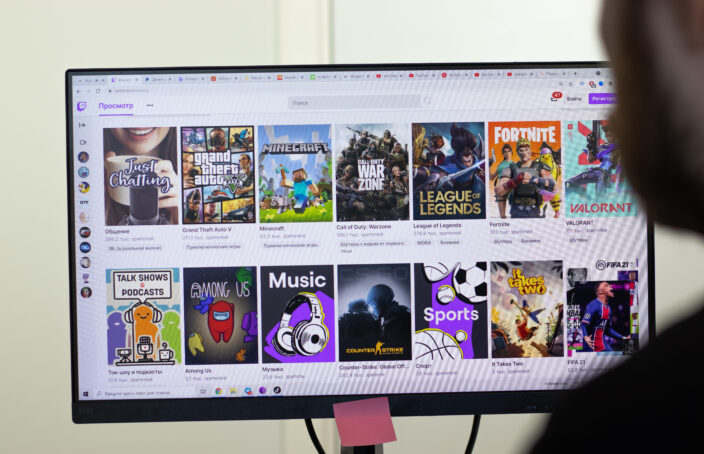
It is a well-known fact and common observation that quite a large number of people in Germany and other German-speaking countries use English in their daily lives for various purposes, professionally, in their leisure time, and also in the (maybe bilingual or multilingual) family. However, there has been a substantial rise and increase in the use of anglophone online resources and options to which users resort in order to participate and benefit from all these resources: video and music channels of all kinds, and pop-cultural ones in particular (the Swifties effect), fan platforms and social media channels of celebrities from all domains like sport, film and pop music, and video gaming and its online communities (see Jones 2018). All of these users generate enormous numbers of followers and fans (Instagram, tiktok) to the extent that there are whole global communities to which you can only belong and contribute if you are proficient in the English language. Moreover, there is an impressive number of informative formats like podcasts or academic or scientific YouTube videos accessible in the English language on an immensely broad scope from astronomy to book talks or video games which our students access on a regular basis.
Substantial effects on young speakers of English
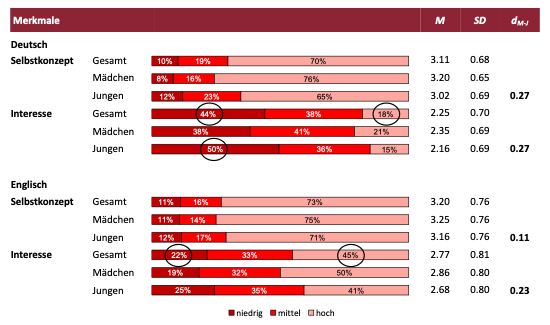
In Germany, the substantial implications of the extramural use of English for the language classroom were first brought to our attention by a broad-scale empirical study conducted by the German IQB (Institut für Qualitätsentwicklung im Bildungswesen – Institute for Quality Development in Education) in 2022. The study (IQB 2023) among ninth-graders in Germany showed that the cultural omnipresence of English resulted in a significant increase of listening and reading skills, confirming findings in a 2009 study conducted by Pia Sunquist in Sweden and Johanna Uhl’s highly differentiated findings in 2019 (see reference below). N. Dobric and D. Jones are currently also evaluating a study they conducted in Austria concerning correlations between the use of extramural English and language proficiency (reference below). What’s more, in the IQB study 90% of those surveyed declared English as a substantial dimension of their self-concept. This self-perception corresponds with a medium (33%) or high (45%!) interest in the English language, remarkably higher than the figures revealed for German, the language of schooling (see diagram in fig. 1). In the IQB study it was hypothesized that this personal und cultural position of English is the result of the increasing and almost natural use of English in all kinds of digital environments (IQB 2023: 354).
Empirical school and classroom research on extramural English
More empirical evidence can, of course, also be gained in small-scale classroom studies, a type of research that teachers will have engage in, too, in order to gain deeper insight into their students’ proficiency and talent as a result of the extramural use of English. This is why in the Master of Education program in Bonn (Germany) empirical studies are part of the students’ practicum. In several of these studies, young people’s extramural use and acquisition of English was researched.
A study on extramural English among ninth-graders
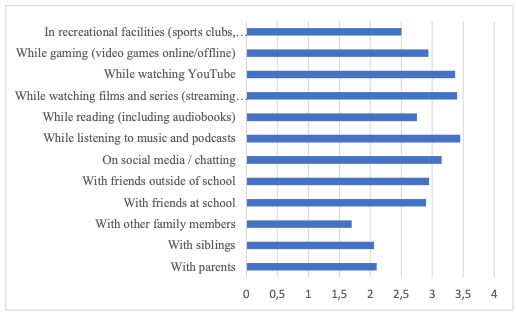
Jana Hombach conducted a survey among 20 ninth-graders from two different classes at an International School, using a 4-point Likert scale, and found that students not only use English outside the classroom occasionally or often, but also that this kind of use occurred most frequently in online activities (see fig. 2). Listening to music or podcasts or watching films and series (mainly in streaming portals) or YouTube videos in English showed the highest mean value (M = 3.37-3.45). 50% (!) of the students reported that when watching content it was always in English, and even 58% for videos. 40% of the students indicated that when communicating via social media and chatting online it was in the English language.
This study also found a significant positive correlation between the self-concept concerning the personal importance of English and its extramural use (r = 0.506, p = 0.023), „indicating that students with a higher self-concept in English tend to use English more frequently outside of school.“ (Hombach 2026: 10; see fig. 3) The findings and figures of this study are impressive, albeit not completely representative of students in Germany. In any case, they point to a fundamental challenge to traditional approaches to foreign language learning in institutional contexts.
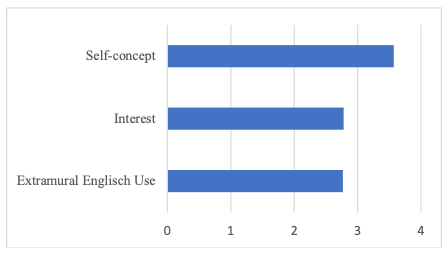
Fig. 3: Mean scores for the extramural use of English, and the students’ self-concept and interest in English (Hombach 2026)
The problem of didacticized language learning
The rather ‘natural’ use of English by language learners questions traditional notions and concepts of language education substantially. This is why the title of a symposium that Dale Jones and I have organized for the 11th Biennial International Conference on the Linguistics of Contemporary English in Klagenfurth, Austria (BICLCE, July 1-4, 2026) asks the question what the implications are “When English is no longer a ‘foreign’ language” (Thematic Session 6). Some of the implications are obvious: English is becoming a language that is part of everyday communication for an increasing number of students, currently almost up to 50% in a given class. For them, it is very difficult to see why they should engage in didacticized, often very artificial and inauthentic language activities in the classroom. They use English as ‘a real language’ and not in fictional pedagogical communicative settings. Their main interest will probably be to improve and develop the ‘real’ English they need and use in their various environments and communities so they become more proficient and also more specialized in the various domains (films, video games, music etc.). Also, if there are students who are quite proficient it is obvious that this will lead to an increasing linguistic and, maybe, cultural heterogeneity in learner groups where some are able to understand and express almost everything whereas others have considerable difficulties because English is still a foreign language to them.
What is the alternative?
I cannot discuss an alternative pedagogy of language education in more detail in this post (maybe later, after the BICLCE symposium) that accounts for so many students’ natural use of English. However, it is obvious that the gap between pedagogical approaches and real-life language acquisition has to be closed so that the students’ extramural language contexts and contacts and their questions become a defining dimension of the language classroom and that, as is the case with the complex task, real-life discourses become the major foil of reference for what happens in the language classroom.
A special thank you goes to Jana Hombach for the permission to present data and findings from her unpublished study (reference below) in this post.
Literature: Dobrić, Nikola & Jones, Dale (2025). Closing the conceptual and terminological gap on the possible statuses of English – Is English still just a special kind of a foreign language? Forthcoming. — Hombach, Jana (2026). The Use of English in Extramural Contexts. University of Bonn, Department of English, American and Celtic Studies. Seminar Paper. [Typescript, unpublished]. — [IQB 2023] Stanat, Petra, Schipolowski, Stefan, Schneider, Rebecca, Weirich, Sebastian, Henschel, Sofie & Sachse Karoline A. (Hrsg.) (2023). IQB-Bildungstrend 2022. Sprachliche Kompetenzen am Ende der 9. Jahrgangsstufe im dritten Ländervergleich. Münster & New York: Waxmann. — Jones, R. D. (2018). Developing Video Game Literacy in the EFL Classroom – A Qualitative Analysis of 10th Grade Classroom Game Discourse. Tübingen: Narr Francke Attempto Verlag. — Sundqvist, Pia (2009). Extramural English Matters. Out-of-School English and Its Impact on Swedish Ninth Graders‘ Oral Proficeny and Vocabulary. PhD Thesis. Karlstad: Karlstad University Studies. — Uhl, Johanna (2019). Informelle Sprachlernbegegnungen mit dem Englischen von Kindern und Jugendlichen bei der Nutzung mobiler Technologien. PhD Thesis. University of Würzburg.