Language Teacher Education in the 21st Century

The issue of professionalisation of English Language Teaching (ELT) remains underexplored in academic discourse. This is why, together with my colleague Prof. Andrzej Cirocki from the University of York, UK, I have written a timely guide to professional teacher development in ELT, showing how teacher educators and classroom practitioners can develop their practice. The book, published by Cambridge University Press, scrutinises key topic areas for teacher education, detailing the specific competences that professional teachers need to demonstrate in the 21st century, including transforming English language classrooms, engaging in ongoing debates that examine theory, research and practice, responding to managerial and policy discourses on English language instruction, and playing a leading role in regulating the entire teaching profession.
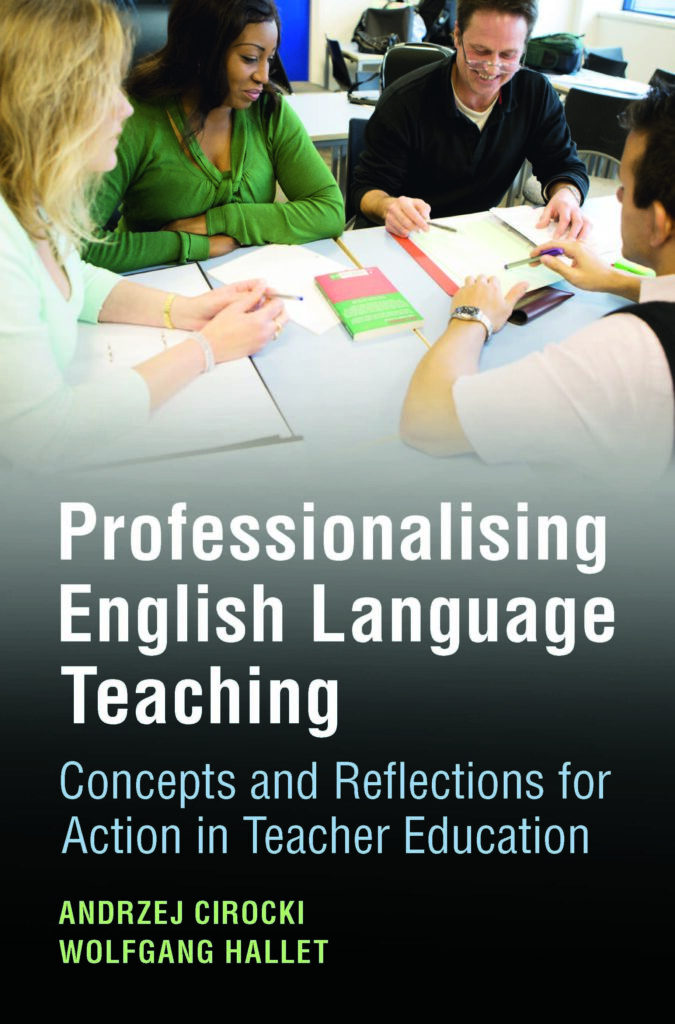
The book highlights how meaningful, impactful, transformative, and sustainable language education requires high-quality teachers who are lifelong learners, classroom ethnographers, and educational leaders. It is essential reading for pre- and in-service teachers, teacher educators and professional development providers, educational researchers, as well as policy makers in the field of ELT.
Key aspects
In nine chapters the book presents a competence-oriented approach to the education of language teachers, describing a number of competence areas in detail and explicating what it takes to become a professional language teacher in the 21st century. Reflective practice and teacher-led research are proposed as a path to teacher professionalism (chapter 4); chapter 7 that addresses teaching English in the digital age is just one of the innovative conceptual approaches which the book presents. Other such concepts are teacher autonomy (chapter 5) or teacher leadership (chapter 8).
The resumé: professional communities
The concluding chapter (9) proposes to regard the whole field of language education as an area of constant development and transformation in order to account for the dynamics of cultural, medial and communicative practices in the 21st century. This is why we are proposing professional development communities in which experts, teachers and teacher educators, scholars, school administrators and other members according to the purpose of the respective professional community join to design and implement changes and transformations of teaching the language and building transformative pedagogical environments in schools.